
Smart Agriculture Case Study: How LoRa Antennas Achieve 10km Wireless Soil Monitoring
A large agricultural group deployed a LoRa-based soil monitoring system. By selecting high-gain fiberglass outdoor antennas, they achieved stable 10km wireless transmission across 500 acres of farmland in flat terrain conditions.
Project Background
Client Requirements
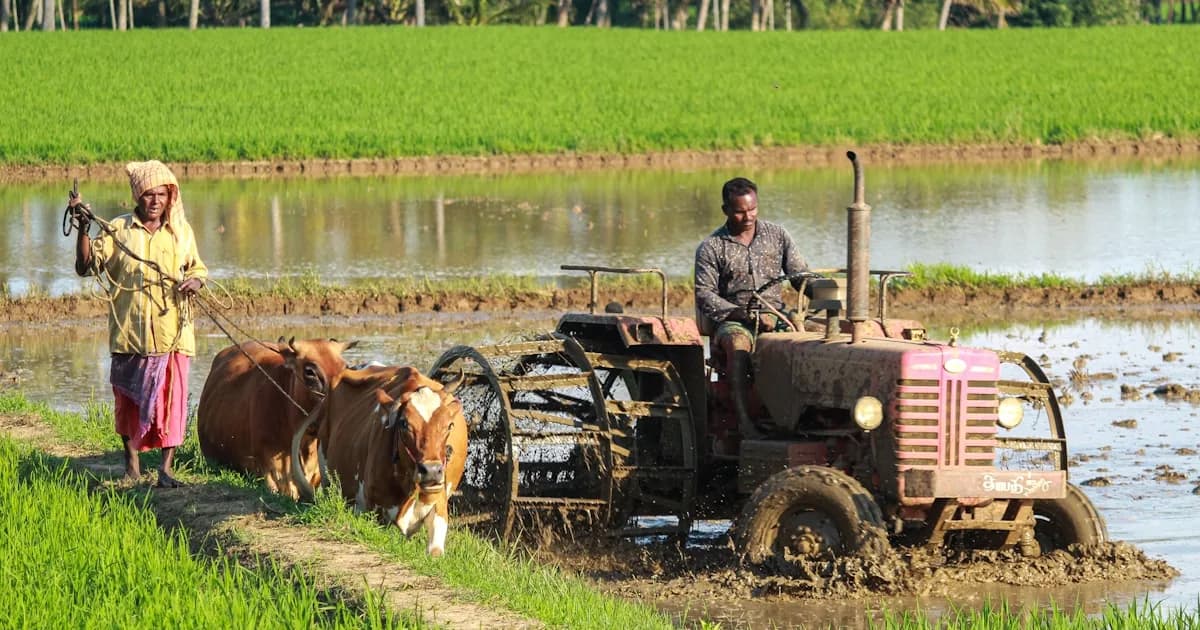
A national agricultural demonstration zone covering over 500 acres required real-time soil temperature, humidity, pH, and EC monitoring:
- Coverage area: 500+ acres (approximately 2 km²)
- Sensor nodes: 200+ buried sensors
- Transmission distance: Farthest node 8-10km from gateway
- Power supply: Solar + battery, no grid power
- Communication: LoRa (868/915MHz bands)
- Reliability: Year-round uninterrupted operation in rain and heat
The Antenna Challenge
The initial deployment used a standard 3dBi rod antenna. Field testing revealed:
- Transmission unstable beyond 5km, packet loss >15%
- Severe signal attenuation during rain
- Nodes obstructed by crops completely unable to communicate
Solution Design
Gateway Antenna Selection
After on-site survey and link budget calculations, our engineering team recommended:
Selected Product: YD-FRP-868 Fiberglass Omnidirectional Antenna
| Parameter | Specification |
|---|---|
| Frequency range | 860-930 MHz |
| Gain | 8dBi |
| Polarization | Vertical |
| Horizontal beamwidth | 360° omnidirectional |
| Vertical beamwidth | 15° |
| Impedance | 50Ω |
| Connector | N-Female |
| Length | 1.8 meters |
| IP Rating | IP67 |
| Operating temp | -40°C to +65°C |
| Wind resistance | 180 km/h |

Installation Design
Key engineering decisions:
- Mounting height: 10-meter pole (4-5m above tallest surrounding crops)
- Lightning protection: Surge protector at antenna base
- Feed cable: Low-loss LMR-400 coaxial cable (0.1dB/m loss @ 868MHz)
- Grounding: Pole ground resistance < 4Ω
Sensor Node Antenna
Considering cost and installation convenience at node level:
Selected Product: YD-R150-868 Compact Rubber Antenna
- Frequency: 860-930MHz
- Gain: 3dBi
- Connector: SMA Male
- Length: 150mm
Implementation Results
Link Budget Comparison
BEFORE (3dBi rod antenna, 2m height):
TX Power (20dBm) + TX Gain (3dBi) - Path Loss (130dB @8km) + RX Gain (3dBi)
= -104dBm (margin above -137dBm sensitivity: only 33dB — unreliable)

AFTER (8dBi fiberglass + 10m pole):
TX Power (20dBm) + TX Gain (3dBi) - Path Loss (125dB @8km) + RX Gain (8dBi)
= -94dBm (margin: 43dB — extremely stable)
Measured Performance Data
| Metric | Before | After | Improvement |
|---|---|---|---|
| Maximum stable range | 5.2 km | 11.3 km | +117% |
| Average RSSI | -121 dBm | -103 dBm | +18 dB |
| Packet loss rate | 15.3% | 0.4% | -97% |
| Rainy day packet loss | 28% | 1.2% | -96% |
| Node online rate | 82% | 99.6% | +21% |
Operational Stability
The system has operated continuously for 14 months:
- Survived 3 storms (max wind speed 150km/h) — antennas undamaged
- Operated through -8°C and 42°C extremes — no performance degradation
- Lightning arrester activated twice — gateway equipment fully protected
Key Lessons Learned
Antenna Selection Factors for Agriculture
- Gain > omnidirectionality: Flat terrain means high-gain vertical compression doesn't affect coverage
- Installation height is critical: Each meter of height equals 2-3dB effective gain improvement
- IP rating must meet requirements: Agricultural environments demand IP67 minimum
- Lightning protection is essential: Isolated poles are the highest point — lightning rods are mandatory
- Use low-loss feed cable: The insertion loss difference between RG58 and LMR-400 over 10m can reach 3-5dB
Cost-Benefit Analysis
| Approach | Cost |
|---|---|
| Original plan (200 nodes with high packet loss, requiring 3 additional relay gateways) | $6,200 |
| New plan (2 high-gain antenna gateways covering entire area) | $1,650 |
| Savings | $4,550 (73%) |
Conclusion
Correct antenna selection can dramatically improve system coverage and reliability without increasing transmission power. For wide-area IoT applications in agriculture, utilities, and forestry, high-quality outdoor antennas are the foundation of stable system operation.
Contact [email protected] for similar project antenna consultations